Millions of Bitcoin Are Gone Forever — Here’s How to Avoid Losing Yours
Bitcoin doesn’t forgive mistakes.
Unlike banks, password resets, or customer support desks, Bitcoin operates on a brutal rule: lose your private keys, and your money is gone forever. Not frozen. Not paused. Gone.
As of late 2025, analysts estimate between 2.3 million and 3.7 million BTC are permanently lost — roughly 11%–18% of Bitcoin’s total 21 million supply. Some estimates push that number closer to 4 million BTC.
That’s not a rounding error.
That’s a structural reduction in supply.
And almost all of it traces back to one cause: human negligence.
What “Lost Bitcoin” Means in This Case
Bitcoin is never destroyed.
It’s locked away beyond recovery.
When someone loses a private key — whether through:
- a discarded hard drive
- a forgotten password
- a damaged phone
- or a lost seed phrase
the Bitcoin tied to that key becomes permanently inaccessible.
It still exists on the blockchain.
It’s just unreachable.
Think of it like a vault buried under concrete with no combination left on Earth.
As Bitcoin’s creator once put it:
“Lost coins only make everyone else’s coins worth slightly more.”
That’s cold comfort if you’re the one who lost them.
Real Stories, Real Losses
- James Howells threw away a hard drive holding 8,000 BTC in 2013. Today, that’s over $700 million, buried in a landfill and almost certainly unrecoverable.
- Stefan Thomas forgot the password to an IronKey containing 7,002 BTC. He has two attempts left before the device encrypts itself forever.
How Experts Estimate Lost Bitcoin
There’s no “lost” label on the blockchain. Analysts rely on indirect methods:
Dormant Wallet Analysis
Addresses untouched for 5–10+ years are flagged as likely lost. This alone accounts for 1.5–2 million BTC.
Early Mining Rewards
Roughly 1 million BTC mined by Satoshi Nakamoto and other early miners have never moved.
Burn Addresses
Some coins are intentionally sent to addresses with no private key — effectively destroyed.
On-Chain Heuristics
Firms like Chainalysis and Glassnode analyze UTXOs, wallet clustering, and transaction behavior to estimate losses.
None of this is exact.
But the conclusion is consistent: millions of BTC are gone forever.
Lost Bitcoin vs. Bitcoin “Dust”
Not all stuck Bitcoin is lost.
- Dust = tiny amounts of BTC that aren’t worth spending due to fees
- Lost BTC = coins with no recoverable private key
Dust can become valuable again if fees drop or price rises.
Lost Bitcoin never comes back.
That distinction matters.
Why This Makes Cold Storage Critical
Every lost Bitcoin story shares one trait:
👉 Keys were not properly secured.
Keeping crypto on exchanges, hot wallets, browsers, or devices connected to the internet increases exposure to:
- accidental deletion
- device failure
- phishing
- malware
- human error under stress
Cold storage isn’t about paranoia.
It’s about finality.
Once Bitcoin is lost, no institution can help you.
Best Cold Storage Wallets (2025 Edition)
Not all cold wallets are equal. Based on security, usability, and real-world trust, here are solid options depending on your needs:
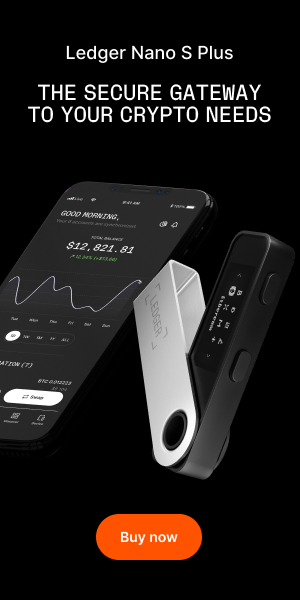
Ledger Nano S Plus
J.A Score: 4.2
A compact, affordable entry into cold storage.
Ideal for beginners who want:
- strong security
- wired USB use
- no Bluetooth
- simple long-term holding
Reliable, battle-tested, and beginner-friendly.
Trezor Safe 7
J.A Score: 4.5
A premium evolution of the Trezor line:
- Bluetooth support
- sharper screen
- auditable secure chip
Best for users who value transparency and advanced UX without straying into complexity.
SafePal S1
J.A Score: 3.4
An air-gapped wallet using QR codes:
- no USB
- no Bluetooth
- offline by design
Great security at a lower price, but the workflow adds friction.
Keystone Pro
J.A Score: 3.4
Open-source and Bitcoin-friendly with strong DeFi support.
Security is solid, but:
- setup is slow
- QR workflow isn’t for everyone
Better suited for power users than newcomers.
The Harsh Reality
Bitcoin’s scarcity isn’t just mathematical.
It’s psychological.
People underestimate how easy it is to make one irreversible mistake.
Cold storage doesn’t make you richer.
It makes sure you don’t disappear yourself from the supply forever.
Bitcoin rewards responsibility — and punishes carelessness without mercy.
If you hold Bitcoin long-term and you’re not using cold storage, you’re gambling with something that cannot be replaced.
And the blockchain won’t care how careful you meant to be.